Most of us learnt it as borrowing. NCETM materials for schools in England call it exchanging: one ten becomes ten ones, and the sum carries on. Here is what is really happening, and where children tend to slip.
Choose a subtraction to see whether it needs an exchange, and how many. The bar shows how many exchanges the sum asks for.
Examples from a 2020 study of multi-digit subtraction in Frontiers in Education and NCETM guidance. General information for parents and carers.
TWO NUMBERS WORTH KNOWING
When it is taught, and where it trips.
One figure from England's national curriculum, one from a study of how children go wrong.
3 digits
Column subtraction starts with numbers up to
In Year 3, pupils in England add and subtract numbers with up to 3 digits using formal written columnar methods. Year 4 moves to up to 4 digits, and Year 5 to more than 4.
YEAR 3 · NATIONAL CURRICULUM
264 pupils
Third-grade pupils whose answers were analysed
A Dutch study of 264 pupils from 12 primary schools found sums like 1000 − 680 were best at revealing bridging errors, and sums like 1000 − 20 the least.
DIAGNOSTIC STUDY · 2020
The study's starting point: not every subtraction error is informative. Sums that need borrowing, such as 1000 − 680, were the ones most likely to draw out errors like smaller-from-larger.
FOUR WAYS TO HELP
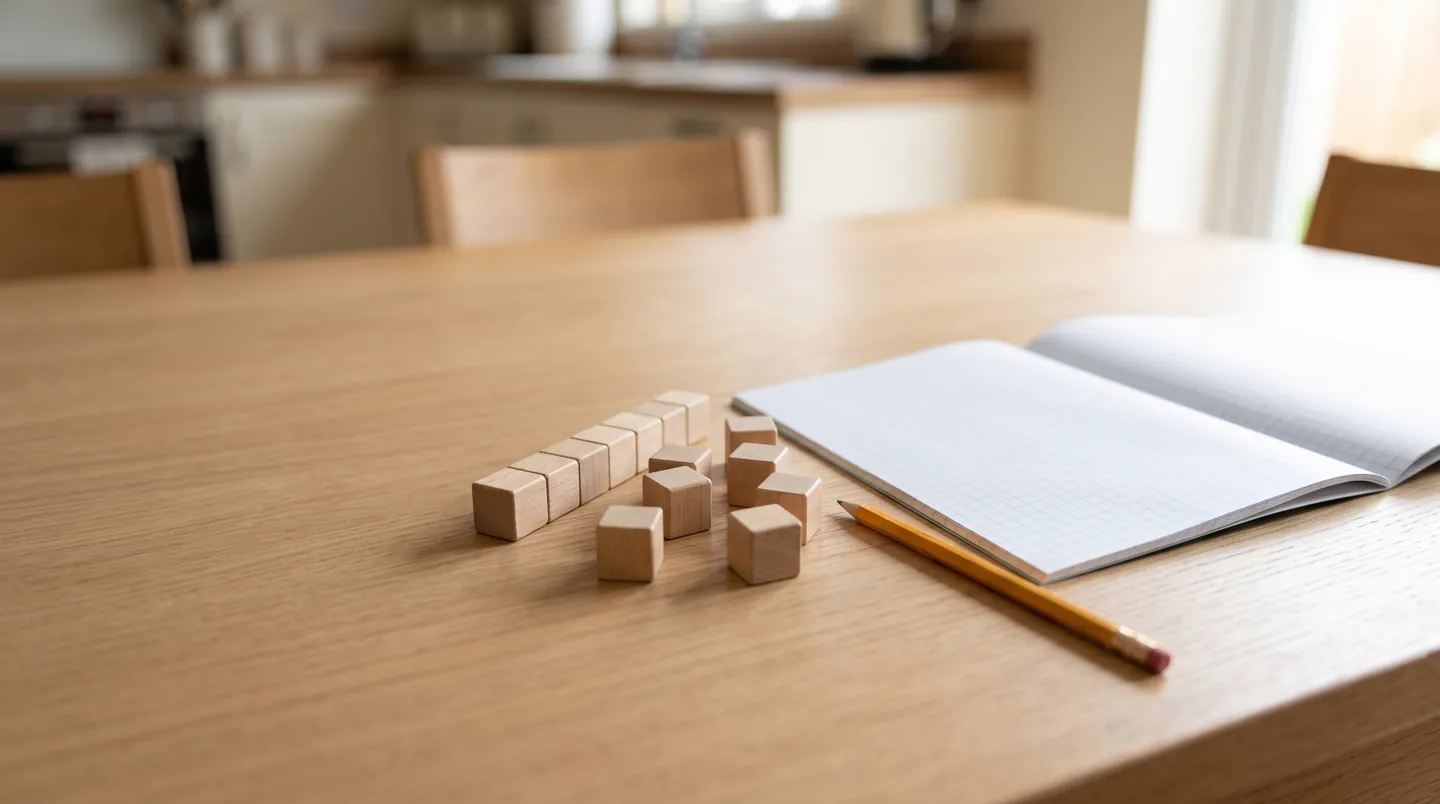
Make the ten something you can see.
Children usually learn this in Year 3. These habits follow NCETM guidance and work at a kitchen table with things you already have.
Use the right words
Name the parts: in 125 − 57 = 68, 125 is the minuend, 57 the subtrahend and 68 the difference.
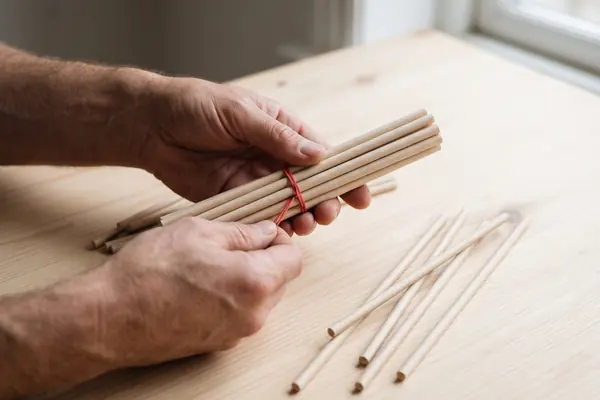
Bundle straws in tens
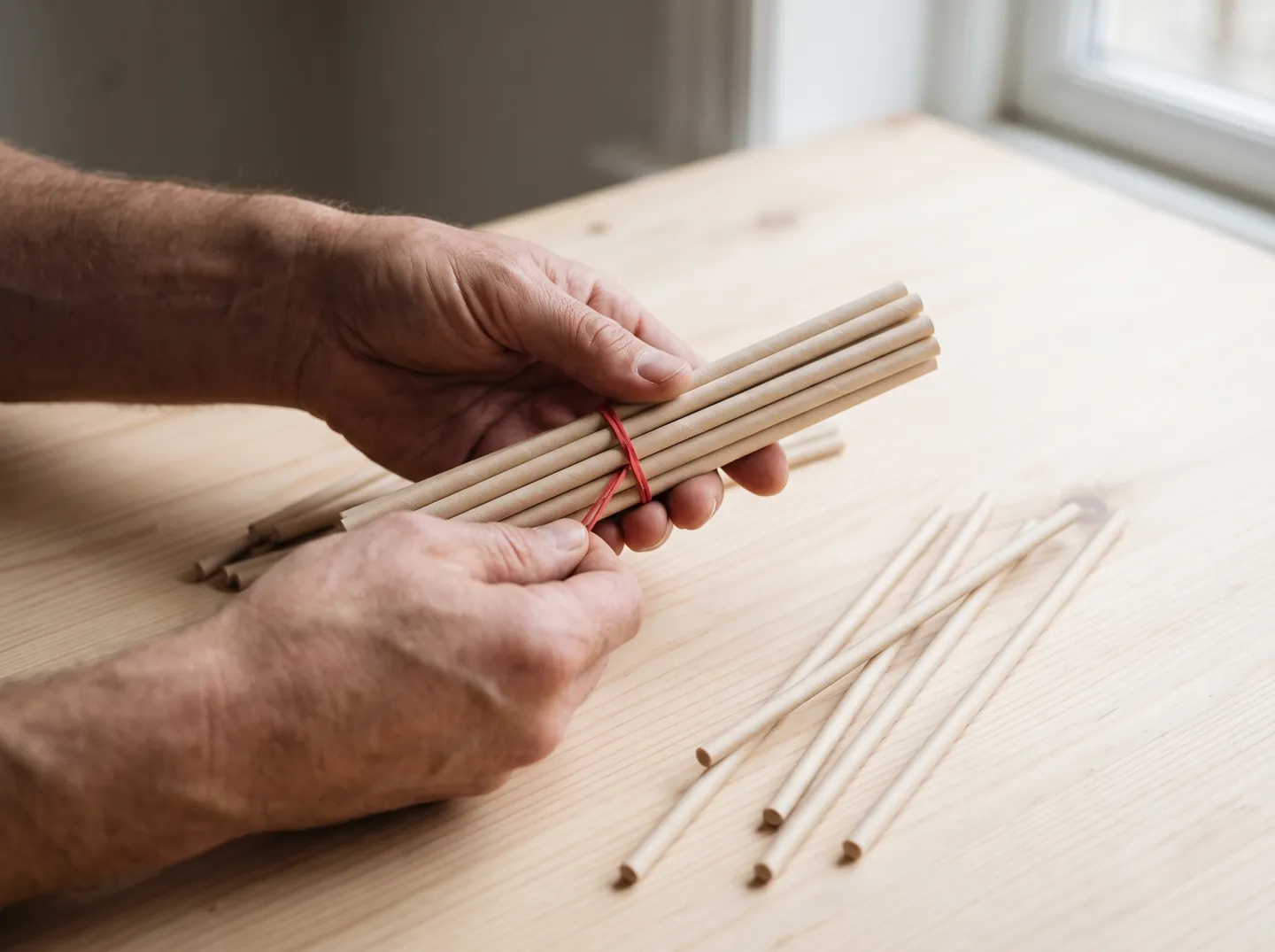
Put elastic bands round tens of straws. When a column runs short, undo one bundle into ten loose straws.
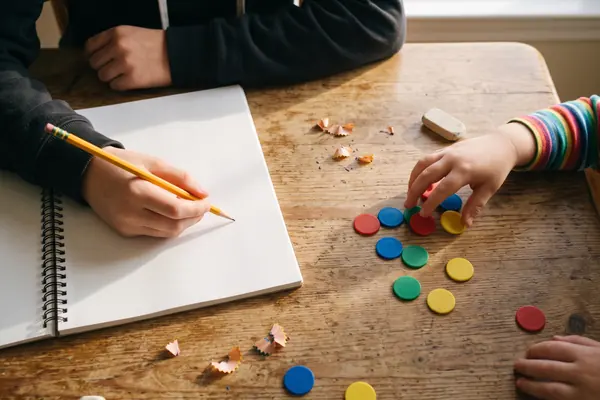
Only build the top number
Make the starting amount with objects and take the second number away. Building both numbers can confuse what is being removed.
Check by adding
The curriculum encourages adding to check subtraction: 68 + 57 should give back 125.
AI-generated image, not a photograph of a real person or place.AI-generated image, not a photograph of a real person or place.
TWO WAYS TO BORROW
Decompose, or add to both.
The exchanging taught with NCETM materials is decomposition, also called trading: 34 becomes 20 + 14, so 34 − 16 is (20 − 10) + (14 − 6) = 18.
Another method, equal addition, is known to some people as borrow and pay back. You add ten ones to the top number and one ten to the bottom, so 34 − 16 becomes 44 − 26. The difference stays the same, so the answer is still 18.
Questions
Questions people ask
Is borrowing the same as exchanging?
Yes, for the usual school method. When a column does not have enough to subtract from, one unit from the next column to the left is exchanged for ten of the smaller unit. NCETM materials call this exchanging.
When do children learn column subtraction in England?
The national curriculum introduces formal columnar subtraction in Year 3 with numbers up to 3 digits, then up to 4 digits in Year 4 and more than 4 digits in Year 5.
Why does my child write 6 − 4 when the sum says 4 − 6?
This is the smaller-from-larger error, one of the common errors NCETM lists. It often shows the child is not yet sure what to do when the top digit is smaller, so going back to objects such as bundled straws can help.
Why are zeros so hard?
In a sum like 400 − 27 there are no tens or ones to take from, so the exchange has to cross more than one column. NCETM lists not recognising the value of zero among common errors.
What is the 'borrow and pay back' method?
It is the equal addition method: add ten to the top number's ones and one ten to the bottom number. Both numbers rise by the same amount, so the difference does not change.